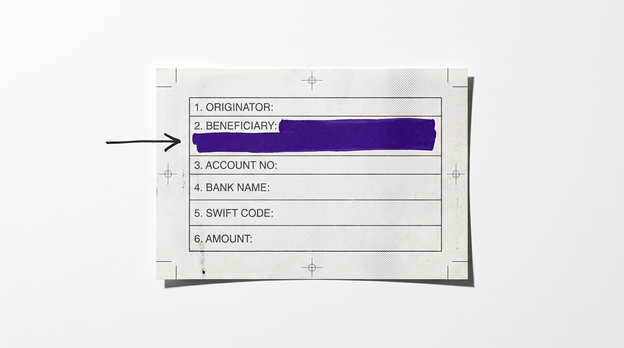
If a bank adds scam warnings, biometrics and extra friction, corporate BEC payment controls still have to prove the changed payee before release. AP needs an evidence record outside the bank session showing the original instruction, trusted channel verification, vendor master approval, and the invoice, mandate or rail change that the new beneficiary is allowed to govern.
The hard line is provenance. Security tools can judge a device, a browser, a session and a signer. They cannot decide whether a supplier meant to move its receivables to the account now sitting in your ERP.
During the first half of the year, the cybersecurity industry recorded over 215 mergers and acquisitions, collectively worth over a hundred billion dollars, with buyers concentrating on AI security, machine identities, browser protection and behavioral fraud detection. Visa's planned $2.4 billion acquisition of BioCatch would add tools that analyze application, behavioral, device and network signals, including keystrokes and device handling. Those signals can say the user looks legitimate. They cannot say the vendor instruction is true.
Corporate BEC payment controls sit before the bank screen
The boundary is the last internal proof point before a payee, mandate or rail change can create a release-ready payment. The bank sees a signer and a payment instruction. AP has to prove the beneficiary instruction that fed that payment.
The bank should authenticate the session, present warnings and apply its own fraud models. The company still owns the vendor record, the invoice approval, the rail choice and the exception decision.
A bank warning can slow the act of paying. It can tell the signer that the account is new, the destination is unusual or the payment sits outside a pattern. But the warning is downstream. By then, the vendor master may already have changed. The payment file may already carry the new beneficiary.
The bank can authenticate the signer, not the instruction
Authentication answers who is acting. Instruction provenance answers whether the payment destination came from the real supplier, through an approved path, for a specific obligation.
The acquisition market exposes this blind spot. Buyers are trying to combine identity, network, application, behavioral and operational data so firms can see who or what is acting and whether that behavior should be trusted in real time. In the same market view, 42% of bank and non-bank issuers ranked fraud and disputes as either their biggest or second-biggest platform-related operating cost after employees.
Those controls matter. They are aimed at the actor and the session. A bad payment can pass them because the actor is often an employee with authority. The employee may have logged in from a known device. The approval path may be complete. The payment may match an invoice amount.
The failure sits earlier. The changed payee record has been treated as clean before the bank ever sees the release.
Faster rails make provenance a settlement control
As rails get faster and more programmable, proof of the instruction has to move earlier. The less time a team has to question or recall funds, the less value there is in finding uncertainty after release.
Pix shows how account-to-account habits can scale. Ebanx expects Pix to account for 45% of Brazil's online sales by the end of 2026 and 50% in 2028. Brazil's central bank also sounds more certain than in the past that it will link Pix to similar platforms in other countries.
Corporate payment infrastructure is moving inside bank balance sheets too. Wells Fargo said it will begin offering tokenized deposits to select corporate and commercial clients this fall, initially supporting transfers between U.S. dollars and British pounds. Citi has tested smart contracts that automatically release payment after a commercial condition, such as delivery of fuel to a ship, has been satisfied.
That is a different control environment. If the payment instruction, business condition and settlement record sit closer together, an upstream payee change has less room to be challenged later. Speed rewards clean evidence. It punishes trust in a field that moved neatly from one system to another.
The proof file lives outside the payment session
The control file should be separate from the bank approval screen and separate from the person who entered the vendor change. It should let a reviewer reconstruct the source of the beneficiary instruction without trusting the payment record itself.
The file does not need to be ornate. It needs to be specific enough that treasury can say, before release, that the new account or rail came from the supplier through a known path and was verified by someone other than the person who entered it.
- AP vendor master owner: freezes the existing payee when a bank account, mandate or rail change arrives outside an agreed channel.
- Requester proof: saves the original change instruction as received, including portal task, email, ticket or signed form.
- Independent callback: uses a preexisting phone number or portal contact, not contact data inside the change request.
- ERP control owner: attaches the verification record to the vendor master change, not only to the invoice batch.
- Treasury release owner: compares the ERP vendor record, TMS template, bank beneficiary screen and stored instruction proof before approval.
- Exception owner: documents who accepted release risk when proof is incomplete and why payment could not wait.
The owner split matters. If AP receives the request, enters the bank account and also supplies the release evidence, the control has collapsed into trust in one workflow. If treasury only checks that the bank screen has warnings cleared and approvals complete, treasury is reviewing the payment session rather than the instruction chain.
The better test is plain. Could someone who did not receive the request read the file and tell where the instruction came from, how it was verified and which payment it authorized? If not, the company is asking the bank to catch a provenance failure the bank cannot see.
The portal is not the control by itself
A vendor portal can be part of the evidence, but it is not proof on its own. The control depends on whether the portal change can be tied to an authorized vendor contact and a verified business event.
That distinction will matter more as portals, ERPs, TMS tools and bank channels pass more data between each other. A populated field can look authoritative because it arrived through an integration. The release question is narrower. Does the underlying instruction have its own source record?
Payment firms and banks will keep adding friction where they can see risk. The company has to place its own friction where the instruction changes. If your next bank screen has better warnings, treat that as a payment-session control. Do not let it replace proof of the changed beneficiary before the file leaves AP.
Questions practitioners ask
Can bank scam warnings validate a changed supplier account?
No. A bank warning can flag an unusual payment, new beneficiary or risky session, but it cannot prove that the supplier requested the changed account. That proof has to come from the company's own records: the original instruction, verification through a trusted channel, vendor master approval and a release check against the payment file.
Who should own proof of a beneficiary instruction change?
AP should own the vendor instruction record because AP receives and maintains the supplier data. Treasury should own the release check because it controls settlement risk. The same person should not receive the change, enter the new account and provide the only evidence that the payment is safe to release.
What record should AP keep before releasing a changed payee?
AP should keep the original change request, the verification method, the trusted contact used, the name of the verifier, the vendor master approval and the invoice or mandate affected. The record should sit outside the payment approval screen so a reviewer can test the source of the instruction, not only the payment details.
How do faster account-to-account rails change the control?
Faster rails reduce the time available to question, recall or reverse a questionable payment after release. That makes instruction provenance a pre-release control. Before a changed payee reaches the bank, AP and treasury need evidence that the new destination came from the real supplier and applies to the obligation being paid.
Sources